

The short version
Long before the barrel saunas lined Irish piers, people across the north and west crawled into small stone huts, sealed the door and sweated out what ailed them. They called it a teach allais, a house of sweat. About 306 are recorded on the island, 108 of them in Leitrim. The first written account dates from 1796. Whether the idea reaches back to the Bronze Age burnt mounds, the fulachtaí fia, is one of Irish archaeology's longest-running arguments, and this guide sets out what is known and what is only argued.
What a sweathouse is
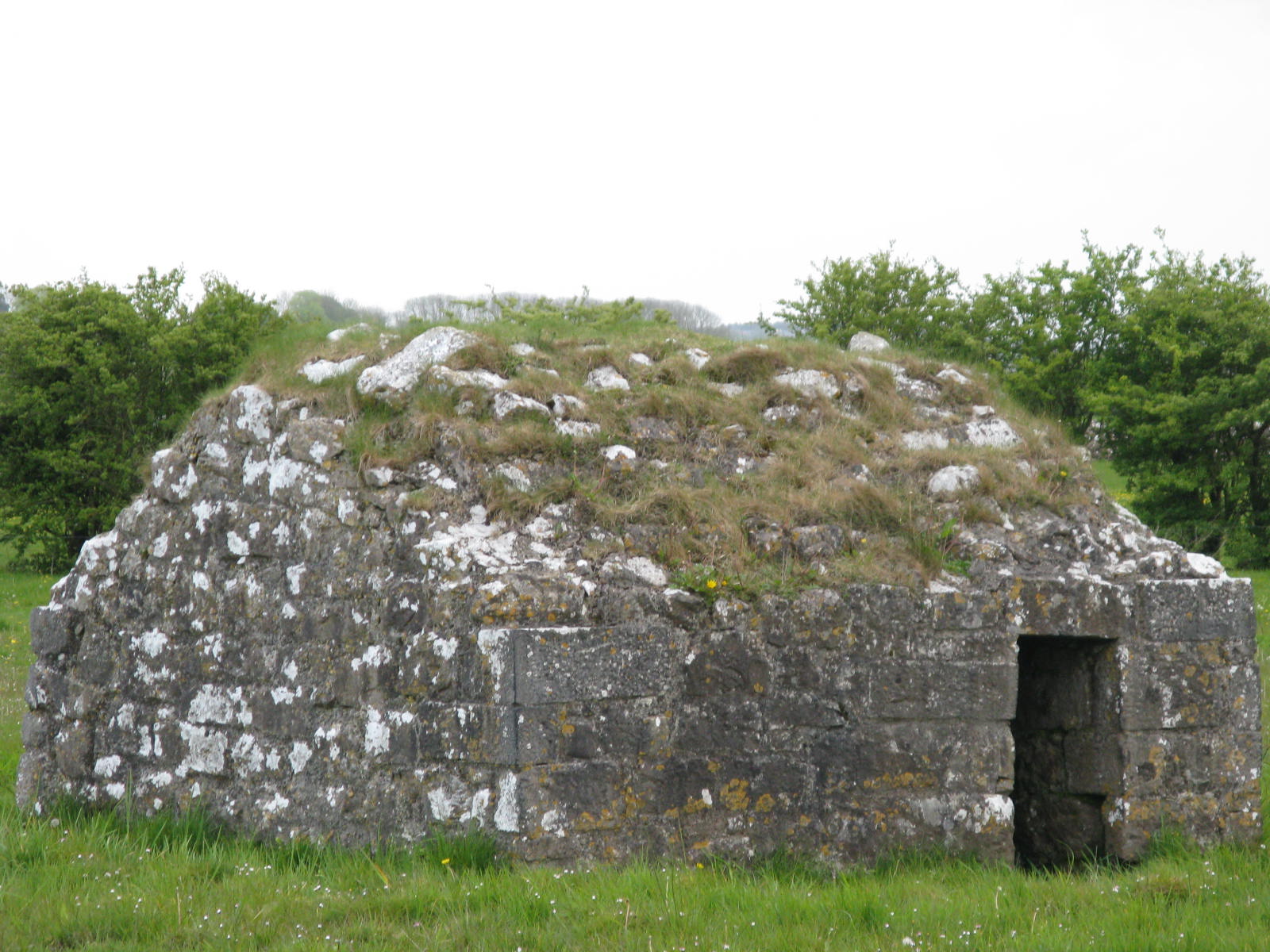
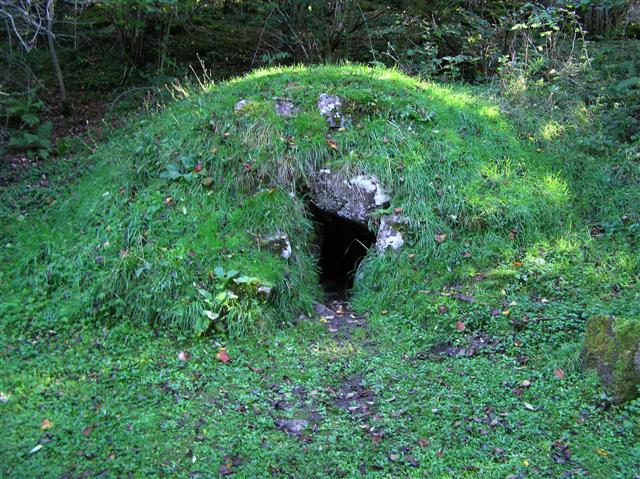
A sweathouse is a small building made for one job: getting very hot. Most are built of dry stone without mortar; the archaeologist Aidan Harte found about nine in ten are drystone. They come in two broad shapes, a round beehive with a corbelled stone roof or a squarer box roofed with long stone lintels, and many were then covered with sod, so from outside they look like a grassy hump.
They are small. Inside, a typical sweathouse is one to two metres across and a metre to a metre and a half high, with an entrance only about half a metre tall. You do not walk in; you crawl. Most would hold two or three people. Many sit beside a stream, a lake or a pool, because a sweat ended in cold water.
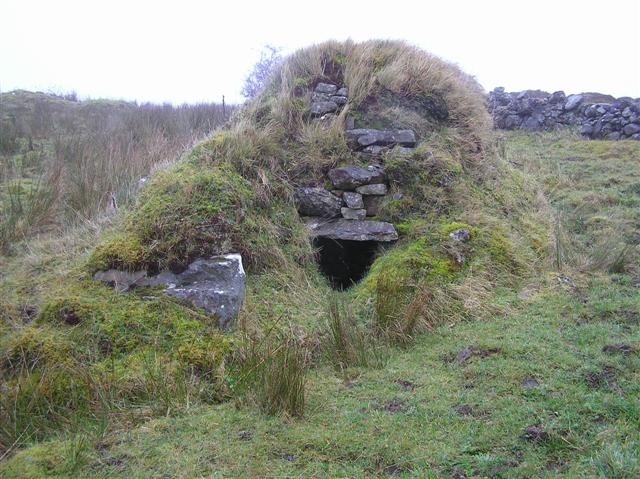

The Irish name is teach allais, also written tigh allais: sweat house. It turns up in placenames and the folklore record, and it is the name Ireland's sauna revival keeps borrowing.
How a sweat worked
In the late 1930s, the Irish Folklore Commission asked national school children to write down the lore of their own parish. The result, the Schools' Collection, is now online at dúchas.ie and holds dozens of sweathouse accounts from Leitrim, Roscommon, Sligo, Cavan, Louth, Wicklow, Westmeath and Donegal. Read them side by side and the ritual is remarkably consistent:
Heat, sweat, cold water, rest. The Irish countryside had the whole ritual two centuries before the barrel sauna.
Five voices from the 1930s
- Cor na Gaoithe, Co. Leitrim. Mary Little, aged 72, describes a round stone house with a flagged floor and a flagstone roof sealed with clay and sod. Coals in the middle, turf around them, rushes in the door; then coals out, green rushes down, and the patient sealed in for one to two hours against rheumatism and aching bones. Read it
- Valleymount, Co. Wicklow. Mrs P. Lawler, aged 84, remembers the sweathouse at Annacarney: fire let burn out, ashes removed, the patient in to sweat, then a plunge into the Cockbrook stream beside it. She put the last cure there at about thirty years before she spoke. Read it. Annacarney is the only sweathouse in the official record for County Wicklow, and it still stands in its stream gully. In the Outsider Ireland film below, two lads crawl into it. Local tradition, passed to them by a National Monuments Service archaeologist, says the Earl of Kildare brought warriors down from Donegal to police his land, and that they brought the sweathouse custom with them. We have not found that story in writing, so treat it as tradition.
- Coralstown, Co. Westmeath. Patrick Geraghty, aged 55, places the parish sweathouse in a field where four townlands met. Friends brought anyone with a bad cold or rheumatism, lit a big fire, put them in, and carried them home in blankets afterwards. Read it
- The cabbage leaf. Myles McMorrow's account in the same collection records that each person brought a leaf of cabbage and put it on their head, to keep the head cool and avoid headaches. Read it
- Aghameen, near Dundalk, Co. Louth. Mary Toner's sweathouse had big outer stones and a roof of sticks and sods; the sick were wrapped in blankets and laid on the floor with the door sealed. It was so low and hidden, she says, that a highwayman named Collier used it to hide from soldiers. Read it
- And dozens more. Search the Schools' Collection for "sweat house" and read the parish you are from.
What it was for
Overwhelmingly, rheumatism: the pains in the joints that came with a lifetime of wet fields and cold cabins. The folklore and the surveys also list sore eyes, gout, lameness, sciatica, lumbago, pleurisy, fevers and bad colds, and Leitrim's 2021 oral history work found people remembering it for chest trouble too.
Was it social as well as medical? The earliest account describes groups of four or five going in together, men or women. Whether a Leitrim sweathouse on a winter evening felt anything like a sauna in Helsinki is a question the record cannot quite answer, but the bones of the ritual are the same.
The first written account, 1796
The earliest written description of an Irish sweathouse comes from a Frenchman. The Chevalier de La Tocnaye, a royalist émigré, walked around Ireland in 1796 and 1797; John Stevenson's English translation appeared in 1917 as A Frenchman's Walk through Ireland.
Near Ballintra, south of Donegal town, his host showed him one: a thimble-shaped oven five or six feet high and about three feet wide, with a ground-level entrance a foot and a half high, heated with turf like a bread oven. Four or five people would crawl in naked, the hole was closed with a board, and they stayed for hours. His guide had used it the day before for sore eyes. La Tocnaye was told there was one wherever four or five cabins stood together, looked upon as a remedy for all ills. He crawled in himself, did not enjoy it, and conceded it seemed to cure rheumatism and chills. The passage is in chapter ten, pages 192 to 194, free on the Internet Archive.
How many, and where
We counted the official records ourselves. The National Monuments Service's Sites and Monuments Record lists 258 sweathouses in the 26 counties. The Northern Ireland record lists 48 more in the six northern counties, over half of them in Fermanagh; fifteen are scheduled and one, Tirkane, is in State Care. That is about 306 recorded on the island.
| County | Recorded sweathouses |
|---|---|
| Leitrim | 108 |
| Roscommon | 46 |
| Sligo | 28 |
| Cavan | 27 |
| Fermanagh | 26 |
| Tyrone | 10 |
| Louth | 9 |
| Derry | 8 |
| Mayo | 6 |
| Antrim, Donegal, North Tipperary | 5 each |
| Galway, Kerry | 4 each |
Counted 3 October 2026 from the NMS sweathouse dataset (258 records) and the Northern Ireland SMR (records typed or described as sweat houses). Counties with three or fewer not shown.
The map tells its own story: the sweathouse belongs to the drumlin and lake country of the north midlands and south Ulster, with Leitrim as its capital.
A record is not a survivor. Many are collapsed, buried, or known only from an old map or a memory. Leitrim's 2021 survey found only about 6% of the county's sweathouses still have a roof and around 84% have collapsed. The Leitrim Sweathouse Project, led by Aidan Harte for the council and the Heritage Council in 2021 and 2022, surveyed over fifty locations and found examples that had never been recorded.
How old are they?
Honestly, nobody knows. Only one Irish sweathouse has ever been scientifically excavated, at Cornacully, Co. Fermanagh. Charred material from it gave a radiocarbon date in the region of AD 500, but the sample was turf fuel, which dates the fuel rather than the building. The Leitrim survey could trace its examples reliably back to about 1800. Most standing sweathouses are probably eighteenth or nineteenth century. The practice may well be older than any building we can still see.
Deeper roots: the fulachtaí fia
Go back further than the stone huts and you reach Ireland's most common prehistoric monument. Fulachtaí fia (singular fulacht fia) are burnt mounds: low, often horseshoe-shaped heaps of fire-cracked stone and charcoal around a trough, usually beside water. People heated stones in a fire and dropped them into the water-filled trough until it boiled. Ireland has some 6,000 to 7,000 recorded, more than anywhere else in Europe, around 3,000 of them in Cork. Most are Bronze Age.
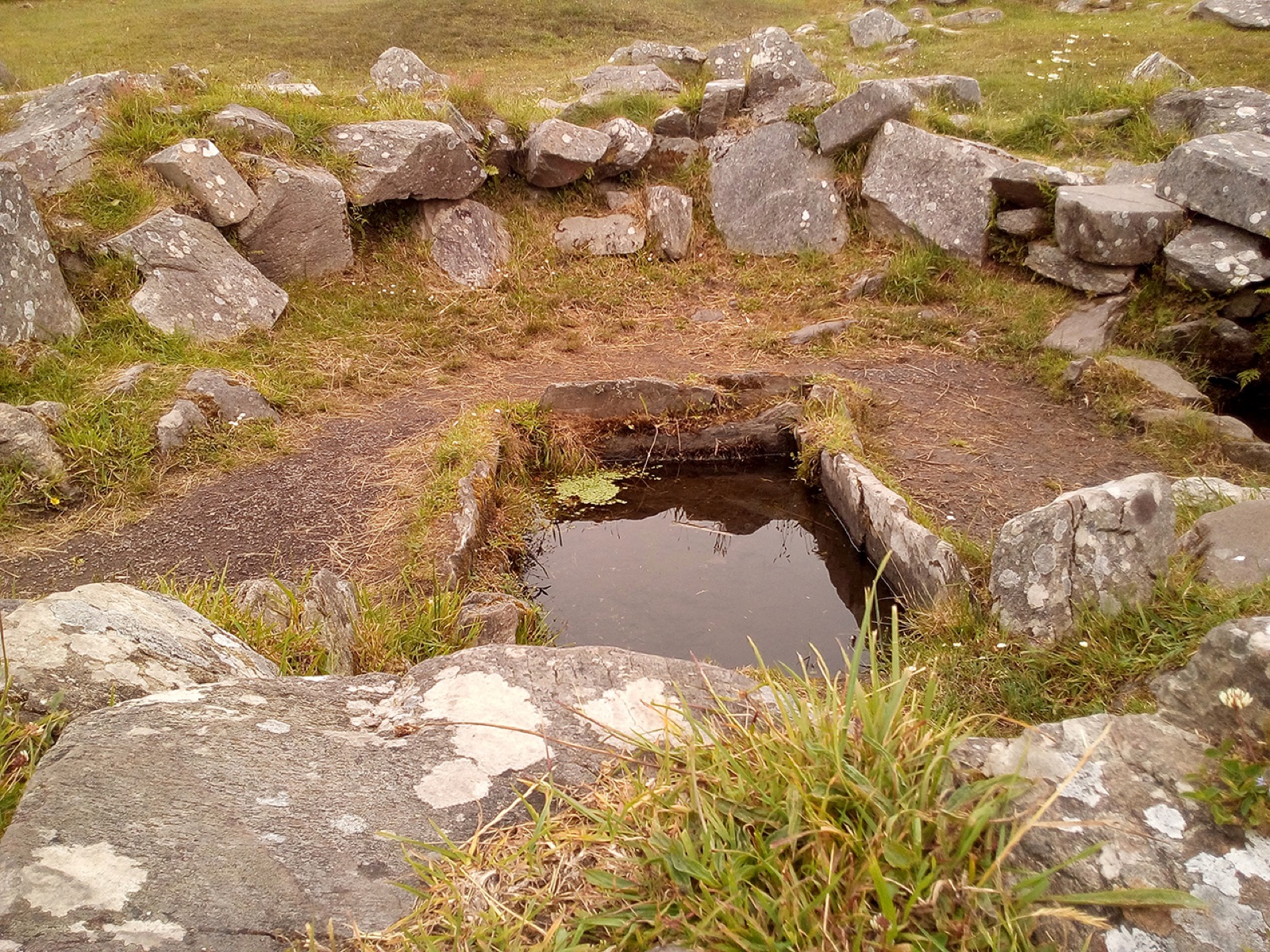

What were they for? The argument has run for seventy years.
Then the road schemes of the 2000s turned up something new. At Rathpatrick, Co. Kilkenny, on the N25 Waterford bypass, excavators found a pit about five metres across ringed with stake-holes beneath a burnt mound. Transport Infrastructure Ireland's own account says it may represent a sweathouse: a tent-like cover over a sunken pool, with hot stones making steam. Even archaeologists sceptical of the sauna theory accept Rathpatrick as a likely sweat lodge. At Scartbarry, Co. Cork, a roofed structure with a hearth and an outside pool was read the same way by its excavators; others think it was a cooking hut.
And there is a striking line in Geoffrey Keating's seventeenth-century history of Ireland. Retelling the legend of the Fianna, Keating has them dig two pits in summer: one to cook meat with hot stones, and beside the other, washing their hair and limbs and getting rid of their sweat. It is legend retold, not a Bronze Age eyewitness, but it shows hot stones, water and washing sitting side by side in the Irish imagination. Read Keating at CELT.
So are the fulachtaí fia the sweathouse's ancestors? No one has shown it. More than a thousand years separates the Bronze Age sites from the earliest dated sweathouse, and nearly three thousand from La Tocnaye. Katie Kearns, whose 2016 UCD thesis is the best modern study of the sweathouse, calls a prehistoric origin tantalising and warns it is not safe to assume. That is where we leave it: a thread worth pulling, not a family tree.
Ireland is not alone. A Bronze Age structure at Nijmegen in the Netherlands, about 3,600 years old, has been read as a sauna with plunge pools, and burnt mounds in Orkney and the Western Isles have prompted the same debate. What Ireland can fairly claim is the densest prehistoric hot-stone record in Europe and a credible case that some of it was for bathing. What it cannot claim is to have invented the sauna.
Why the sweathouse faded
Use fell away from the later nineteenth century. Scholars point to the Famine and emigration, the spread of rural dispensaries and doctors, and the decline of the Irish language and the culture carried in it. By the time the schoolchildren of the 1930s wrote their accounts, the sweathouse was something their grandparents remembered.
Where the idea travelled
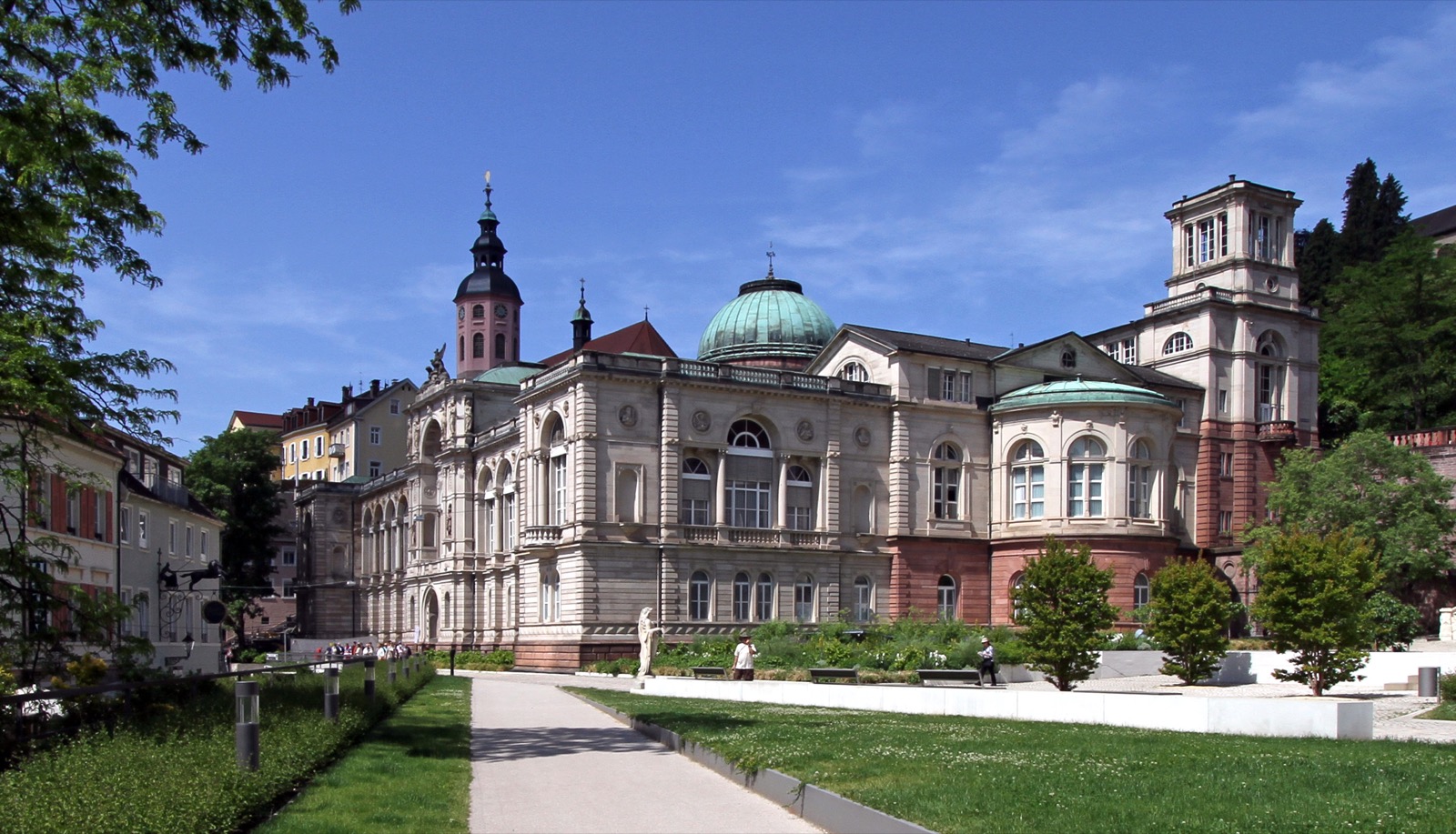
The Roman-Irish bath. In 1856 Dr Richard Barter and David Urquhart built a hot-air bath at Barter's St Ann's Hydropathic Establishment near Blarney, Co. Cork, the first Victorian Turkish bath in Britain or Ireland. Barter's version became known as the Roman-Irish bath and spread through Britain and onto the Continent. The Friedrichsbad in Baden-Baden, opened in 1877, still advertises itself as a Roman-Irish bath. (Irish Examiner, Victorian Turkish Bath project)

Baker's Flat, South Australia. In 2022 the archaeologist Susan Arthure of Flinders University identified a possible sweathouse at Baker's Flat, a settlement of some 500 Famine-era Irish emigrants. If it is one, the tradition crossed the world with the people who carried it. (Archaeology Magazine, ABC News)
The revival
The word is back in Irish life, attached to something its old users would recognise. Over the last decade Ireland has filled with wood-fired saunas on piers, beaches and lakeshores; our directory counts 275 operating saunas across the 32 counties as of October 2026. Several reach back to the teach allais in their names and stories, among them Tigh'N Alluis in Glencullen, Co. Dublin, Sweathouse in Galway and Wexford, and Sweathouse Battlebridge in Co. Leitrim, and Dublin's Sweat House Festival has brought Irish, Finnish and Baltic sauna practitioners together.
The journalist Rosanna Cooney has done more than anyone to join the old and new stories. Her book Sweathouse: The New and Ancient Irish Sauna Tradition (Irelandia Press, May 2025) is the place to start: her Irish Times essay, an extract on TheJournal.ie, and her interview on Today with Claire Byrne.
Where to see one
Sweathouses are protected monuments. Look and photograph, do not climb on them, and never light a fire in one. Many sit on private farmland: ask before you cross a field.
- Kilmore sweathouse, Parke's Castle, Co. Leitrim. Restored by the Office of Public Works and the easiest to visit. Leitrim County Council
- St Hugh's sweathouse and holy well, Ballinaglera, Co. Leitrim. On the Leitrim Way near Dowra. Leitrim tourism
- Creevaghbaun, Co. Galway. A national monument with an interpretive plaque. Visit Galway
- Tirkane, near Maghera, Co. Derry. The one sweathouse in State Care in the six northern counties: lintelled, turf-covered, with a chimney hole and a plunge pool nearby. Department for Communities
- Annacarney, near Valleymount, Co. Wicklow. The county's only recorded sweathouse, beside a stream on private land; ask before visiting. See the Outsider Ireland film below.
- Ballydonegan, Co. Derry. By a stream near Park in the Sperrins. See the film below.
- Knockfierna, Co. Limerick. Limerick's only known sweathouse, shown on Heritage Week tours. See the film below.

And the fulachtaí fia
- Drombeg, near Glandore, Co. Cork. A burnt mound beside the Drombeg stone circle, joined to hut sites by a paved path. Free and open year-round.
- Irish National Heritage Park, Ferrycarrig, Co. Wexford. A reconstructed fulacht fia. irishheritage.ie
- Craggaunowen, Co. Clare. Another reconstruction. craggaunowen.ie
Watch and listen
Sweathouse: Ireland's ancient sauna culture, by Outsider Ireland. Through Wicklow from fulachtaí fia and holy wells to the Annacarney sweathouse near Valleymount, the only one recorded in the county. Some claims in the film, such as a 4,000-year sweat culture, go further than the evidence; see the fulachtaí fia section above.
Ballydonegan sweathouse, Co. Derry, by Sperrin Outdoors.
More films
- Limerick's only sweathouse, Knockfierna Heritage Society, Heritage Week 2022
- Sweathouses in Leitrim and the Leitrim Sweathouse Project, Connecting Through Leitrim's Heritage
- Old Irish folk traditions: the sweat house, Potcheen on the Road
- The Irish answer to the sauna, RTÉ News, June 2021
- Building a sweathouse, part 1, Folkart Films
On Instagram
- @tighnalluis, Tigh'N Alluis, Glencullen
- @sweathouse.ie, Sweathouse, Galway and Wexford
- @rosannacooney, Rosanna Cooney
- @sweathousebattlebridge, Sweathouse Battlebridge, Leitrim
Listen and read
- Sweat Houses: Irish saunas, Pisrógs podcast, March 2026
- Are saunas replacing pubs?, Newstalk Moncrieff, August 2025
- Stories of the sweathouse, Irish Times, August 2021
- The unearthing of Ireland's mysterious naked sweathouses, BBC Travel, October 2021
- Study into ancient Irish-style saunas, RTÉ News, June 2021
Questions people ask
What is an Irish sweathouse?
A small stone building, usually drystone, that was heated with a turf fire and then used for sweating, mainly as a cure for rheumatism. Inside they are one to two metres across, with a crawl-in door about half a metre high. A sweat ended with a plunge in cold water. The Irish name is teach allais, house of sweat.
How many sweathouses are there in Ireland?
About 306 are recorded on the island: 258 in the Republic's Sites and Monuments Record and 48 in Northern Ireland's. Leitrim has the most, 108. Recorded is not the same as standing: in Leitrim only about 6% still have their roof.
Were fulachtaí fia saunas?
Most archaeologists think most fulachtaí fia were cooking places. A minority of excavated sites, such as Rathpatrick in Kilkenny, have structures that excavators read as Bronze Age sweat lodges, and that reading is taken seriously. Nobody has shown a direct line from them to the later stone sweathouses.
Is the Irish sweathouse older than the Finnish sauna?
Nobody can say. Most standing sweathouses are probably from the 1700s and 1800s, and only one has been excavated. What Ireland does have is Europe's densest record of prehistoric hot-stone sites, some of which may have been used for bathing. It is a strong story, but it is not proof that Ireland invented the sauna.
Can you still use a sweathouse?
No. The surviving sweathouses are protected monuments: visit, look and photograph, but never light a fire in one. Many modern Irish saunas borrow the name and the story, if you want to sweat.
Where can I see a sweathouse?
The easiest are Kilmore at Parke's Castle in Leitrim, St Hugh's at Ballinaglera on the Leitrim Way, Creevaghbaun in Galway, and Tirkane near Maghera in Derry, which is in State Care. Ask before crossing private land to reach any of the others.
What is the Irish word for sweathouse?
Teach allais, also written tigh allais, meaning house of sweat.
What we could not verify
- "The last sweathouse was used on Rathlin Island in 1955." This circulates online, but we found no primary or scholarly source, so it is left out. Sweathouses are recorded on Rathlin, and one was written up in 1891.
- An exact date for Rathpatrick. It lies beneath a Bronze Age burnt mound; we have not seen a published radiocarbon date for the structure itself.
- "Sweathouses descend from fulachtaí fia." Possible, argued, unproven.
The bottom line
Ireland had its own sweat-bathing tradition long before the sauna boom: small stone houses heated with turf, a sealed door, an hour or two of heat, and a plunge in cold water, kept alive in rural parishes into the twentieth century. About 306 are recorded, most of them in Leitrim and the counties around it. Whether the idea runs all the way back to the Bronze Age burnt mounds is a real and open question. Every barrel sauna on an Irish pier is, in a sense, a teach allais come home.
About Tigh
Tigh builds booking and growth software for Irish saunas. Our mission is to foster Irish sauna culture: to help more people find a sauna, understand it and make it part of their week. That is why every sauna in Ireland is listed here free, customer or not, and described by the same published method.
Sources
- de La Tocnaye, A Frenchman's Walk through Ireland 1796-7, trans. J. Stevenson (1917), ch. X, pp. 192 to 194
- The Schools' Collection, National Folklore Collection (1937 to 1939), dúchas.ie
- Geoffrey Keating, Foras Feasa ar Éirinn (c. 1634), CELT, University College Cork
- National Monuments Service, Sweathouses dataset, CC BY 4.0
- Northern Ireland Sites and Monuments Record, Open Data NI
- Kearns and Ylimaunu, The sweathouses of Ireland: the disappeared folk tradition of sweat bathing, SKAS 1/2021
- Kearns, Understanding Sweathouses in Ireland with special reference to County Leitrim, MA thesis, UCD (2016)
- Harte, Leitrim Sweathouse Project reports (2021, 2022), Leitrim County Council and the Heritage Council
- Harte, The Munster Sweathouses Project, North Munster Antiquarian Journal 50 (2010), 77 to 88
- Weir, Sweathouses and simple stone structures in County Louth and elsewhere in Ireland, CLAHJ 19(3) (1979); Sweathouses: puzzling and disappearing, Archaeology Ireland 3(1) (1989)
- Richardson, Sweathouses between Blacklion and Dowra, County Cavan, UJA 3rd ser. 2 (1939), 32 to 35
- Danaher and Lucas, Sweathouse, Co. Tyrone, JRSAI 82(2) (1952), 179 to 180
- Foley, Healing Waters: Therapeutic Landscapes in Historic and Contemporary Ireland (Ashgate, 2010), ch. 4
- Foley, The Roman-Irish bath: medical/health history as therapeutic assemblage, Social Science and Medicine 106 (2014)
- Hawkes, The Archaeology of Prehistoric Burnt Mounds in Ireland (Archaeopress, 2018)
- Barfield and Hodder, Burnt mounds as saunas, and the prehistory of bathing, Antiquity 61 (1987)
- Ó Drisceoil, Burnt mounds: cooking or bathing?, Antiquity 62 (1988)
- O'Brien, Aspects of fulachtaí fia function and chronology, JCHAS 117 (2012)
- Quinn and Moore, Fulachta fiadh and the beer experiment, in Dining and Dwelling (NRA, 2009)
- Transport Infrastructure Ireland, Archaeological Discoveries on the N25 Waterford City Bypass
- Cooney, Sweathouse: The New and Ancient Irish Sauna Tradition (Irelandia Press, 2025)
- Kailo, The Irish sweathouse as site of healing, in Sauna Culture, Sweat and Spirituality (Springer, 2025)
Facts checked 3 October 2026. Sweathouse counts are our own count of the National Monuments Service and Northern Ireland SMR open data on that date. Photographs are credited under each image and used under their Creative Commons licences. Spotted something wrong, or know a sweathouse we have missed? Tell us and we will fix it and date the change.